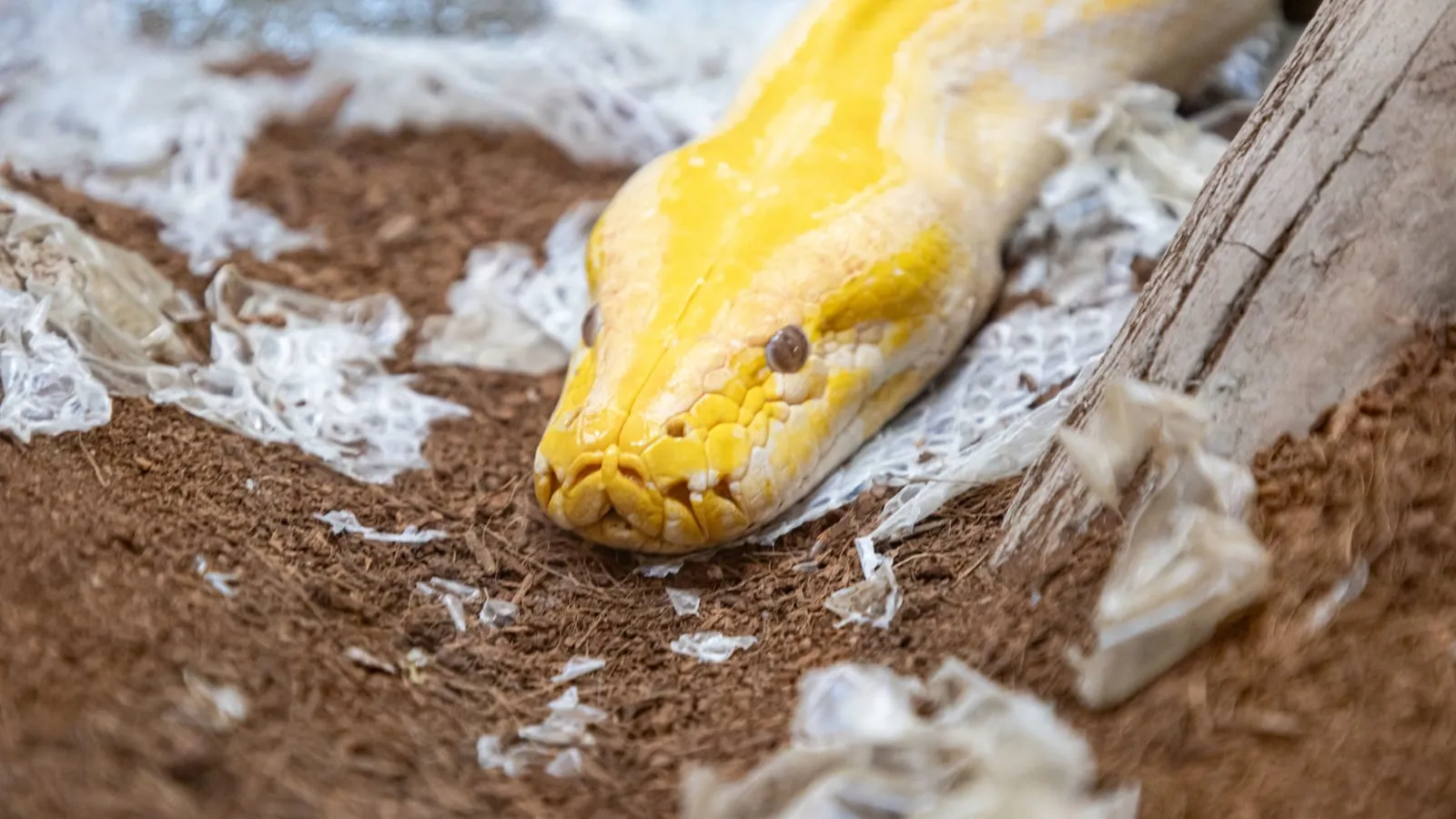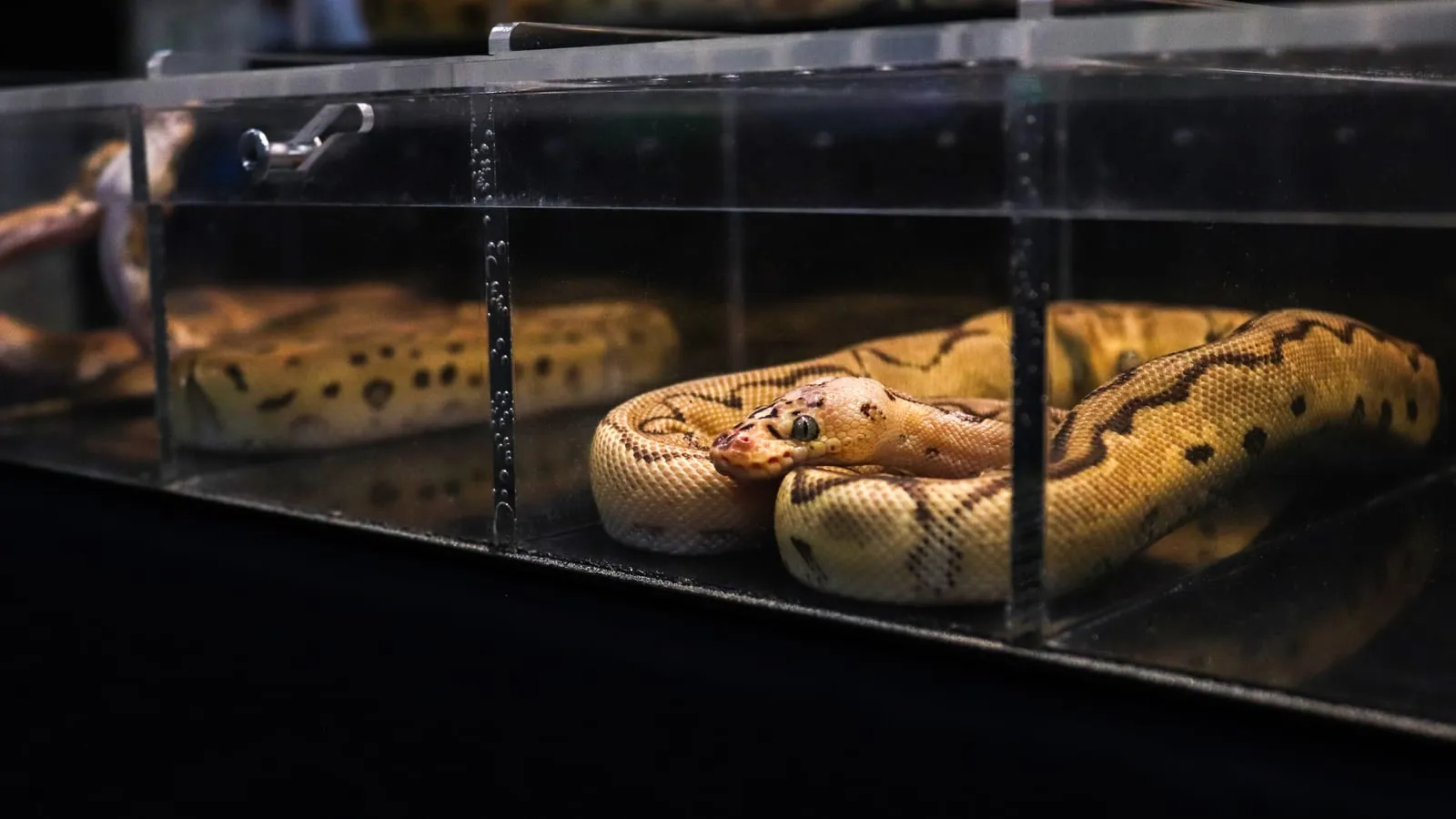
Ball pythons (Python regius) are the most-bred snake in the hobby, and that ubiquity hides a hard truth: breeding is a real commitment, not a weekend project. Done well, it is one of the most rewarding things a keeper can do. Done casually, it produces underweight females, unsellable hatchlings, and animals carrying genes that hurt them. Only breed healthy, well-conditioned, mature snakes — and have a plan, and homes, for every egg that hatches before you ever introduce a pair.
Readiness: size and age over the calendar
You breed the animal in front of you, not the date on its hatch certificate. The numbers below are minimums for a snake in excellent condition, not targets to rush toward.
- Females: typically bred at around 1,500 g and roughly 3 years old. Pushing a smaller or younger female risks egg-binding, weight crashes, and lasting harm.
- Males: mature far smaller and earlier — often capable at around 600–800 g, sometimes younger. Size and age are the floor, not the green light.
Never breed an underweight, recently ill, or visibly stressed animal of either sex. A female pours enormous reserves into a clutch; if she goes in thin, she comes out dangerously thin — or doesn’t come out at all.
Plan the genetics before the pairing
This is where ball python breeding gets its reputation. The hobby revolves around morphs — heritable colour and pattern mutations — and pairing for them is genetics, not guesswork. Three inheritance patterns cover almost all of it:
- Recessive traits (e.g. albino, piebald, clown) only appear when an animal inherits the gene from both parents. A snake with one copy is a het (heterozygous) — it looks normal but carries the trait. Breeding two hets gives roughly one in four visual offspring.
- Co-dominant / incomplete-dominant traits (e.g. pastel, mojave, fire) show a visible effect with one copy and a different, often dramatic effect with two — the super form.
- Dominant traits (e.g. spider, pinstripe) show with one copy and produce no distinct super. In spider’s case there is a reason for that: two copies are never seen, which points to a lethal effect — so two spiders are never paired.
Combining these is how designer morphs are made. Map out the likely outcomes before you pair, and pair for animals that are both attractive and healthy. Our rare ball python morphs guide goes deeper on specific genes and the combinations worth understanding.
Conditioning and the cooling season
Going into the season, both animals should be well-fed, stable, and at a healthy weight — feeding tapers naturally as breeding ramps up, so build reserves first. The trigger most breeders rely on is the seasonal shift of the cooler months:
- A modest drop in ambient temperature, and especially cooler night temperatures, signals the breeding season.
- Keep your gradient sane — hot spot intact, cool end cooler at night. You are nudging seasonal cues, not chilling the snakes.
- Stability matters more than any single number. Erratic swings stress animals out of breeding rather than into it.
Pairing and introductions
Introduce the male to the female’s enclosure and watch. When a pair “locks,” they remain coupled — tails entwined, often back to back — for anywhere from an hour to more than a day.
- Expect multiple locks over several weeks, not a single event. Re-pair every few days through the season.
- Separate them for feeding and rest; you are not housing them together long-term.
- Note every lock by date. Those records become your timeline for everything that follows.
Reading the signs of progress
Once a female takes, her body tells the story in a predictable sequence:
- A noticeable mid-body ovulation swell — a pronounced, temporary bulge as she releases eggs internally. It is brief; if you blink you’ll miss it.
- A pre-lay shed in the weeks afterward, a reliable countdown marker.
- The female typically lays roughly 30 days after the pre-lay shed.
Clutches are usually 3 to 11 eggs, with the female often coiling tightly around them. From the lock dates to the pre-lay shed to lay day, this is a chain of milestones worth logging precisely — they are what let you prepare the incubator at the right moment instead of scrambling.
Incubation
You have two legitimate routes:
- Maternal incubation: leave the clutch with an experienced, well-conditioned female who coils and tends them. It demands a stable, humid setup and a keeper who knows what good looks like.
- Artificial incubation: move the eggs to an incubator held at 88–90°F (31–32°C) with high humidity. This is the common choice for its control and consistency.
A few rules are non-negotiable:
- Do not rotate or flip the eggs. Keep them in the exact orientation they were laid.
- Maintain high humidity without soaking the eggs; a quality substrate and a stable incubator do the work.
- Expect hatching in roughly 55–60 days. Resist the urge to “help” — let them pip and emerge on their own timeline.
Hatchlings: track each one
Newly hatched ball pythons are not ready to eat. Each one:
- Finishes absorbing its yolk sac, drawing down the last of those reserves.
- Has its first shed about one to two weeks after hatching.
- Takes its first meal after that shed — an appropriately sized rodent, usually a small mouse or fuzzy.
Set up each hatchling individually, weigh it, and record its morph, first shed, and first feed. A neonate that refuses several meals or fails to gain needs attention early, and you’ll only catch it if you’re tracking each animal rather than the clutch as a whole.
Breed for welfare, not novelty
The morph market rewards the unusual, and that incentive has a dark side. Some genes carry real welfare costs — neurological “wobble” linked to certain lines, and lethal or severely deformed combinations that should never be deliberately produced. A responsible keeper knows which pairings to avoid and refuses them, full stop. If you’re still deciding whether ball pythons are the right species to keep at all, our best starter reptiles guide is the honest place to begin.
Breeding is also a record-keeping discipline, and that is exactly where LizardBox earns its place. Log every lock as it happens, watch her weight curve through conditioning, and mark the ovulation and the pre-lay shed the day you see them — then set the reminders those milestones earn you: roughly thirty days out for lay day, fifty-five to sixty more from the incubator. With each hatchling on its own profile — linked to its parents, with its morph, first shed and first meal — you keep a clean, honest history of every animal you produce, and its family tree is one step away.