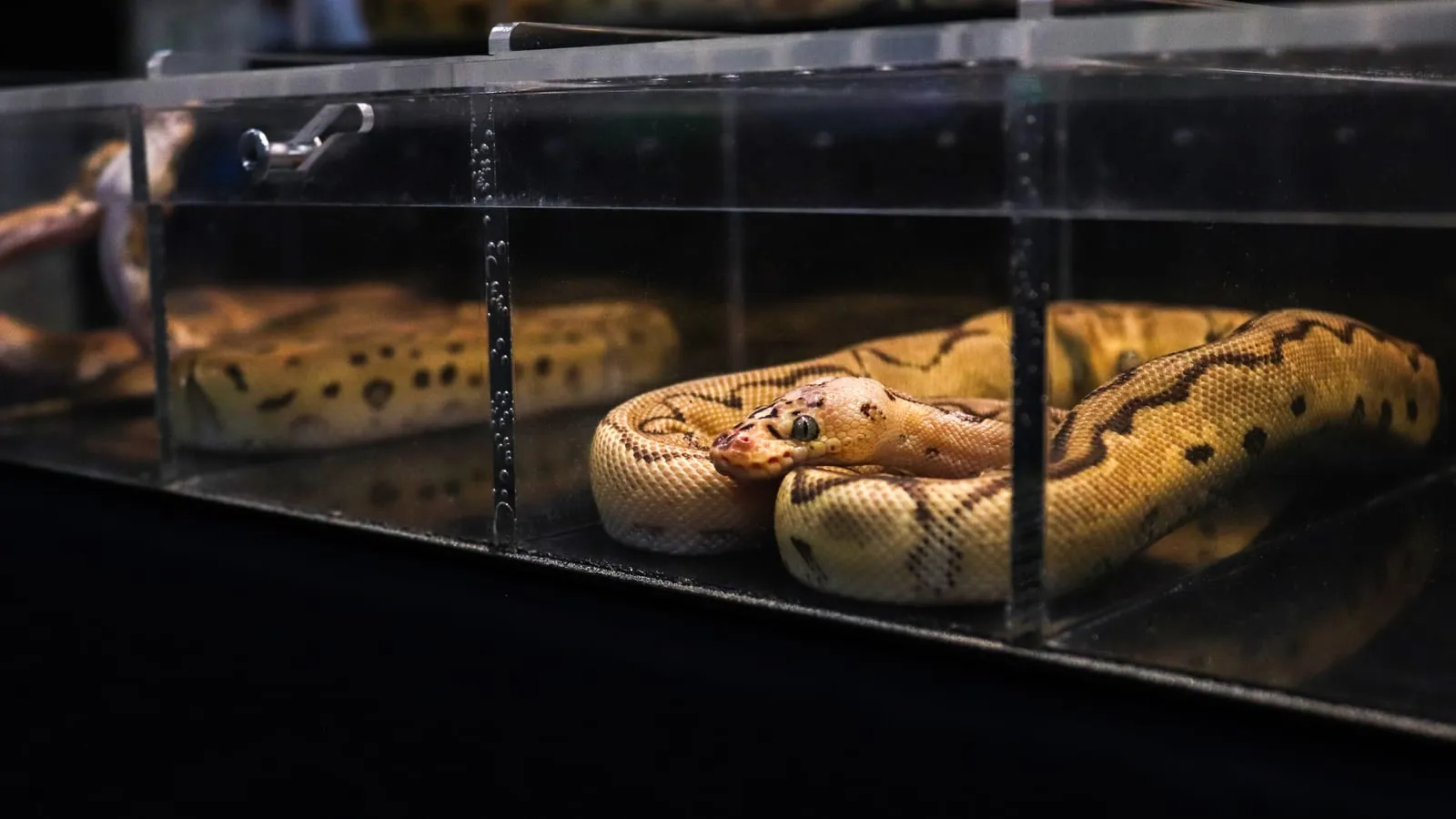
Ball pythons are the most genetically diverse snake in the hobby, and the high end of that world is genuinely strange and beautiful — pure white animals with electric blue eyes, greyscale snakes that look painted in pencil, vivid lavender-and-yellow showpieces. Behind the names and the price tags is a surprisingly tidy set of rules. Learn how the genetics work and the rarest morphs stop being magic and start being math.
How morph genetics actually work
A morph is a heritable colour or pattern mutation — a change to a single gene that alters how the snake looks, passed down predictably from parent to offspring. Keepers sort almost every morph into three buckets based on how that gene behaves.
- Recessive. The mutation only shows when the animal carries two copies. A snake with a single copy looks completely normal but is a “het” (heterozygous) carrier that can pass it on. Two visually normal hets bred together can produce visual offspring — which is why recessive projects take patience and good record-keeping.
- Incomplete-dominant / co-dominant. A single copy produces a visible look; two copies produce a different, usually more extreme “super” form. Pair two single-gene animals and a quarter of the clutch, on average, comes out super.
- Dominant. A single copy shows the trait, and there is no distinct super form — two copies look the same as one.
Stack several of these genes into one animal and you get a “designer” morph — combinations that look nothing like their parents. The rarest, most valuable snakes in the hobby are almost always multi-gene designers, which is exactly why tracking what an animal carries matters so much.
Blue-Eyed Leucistic (BEL)
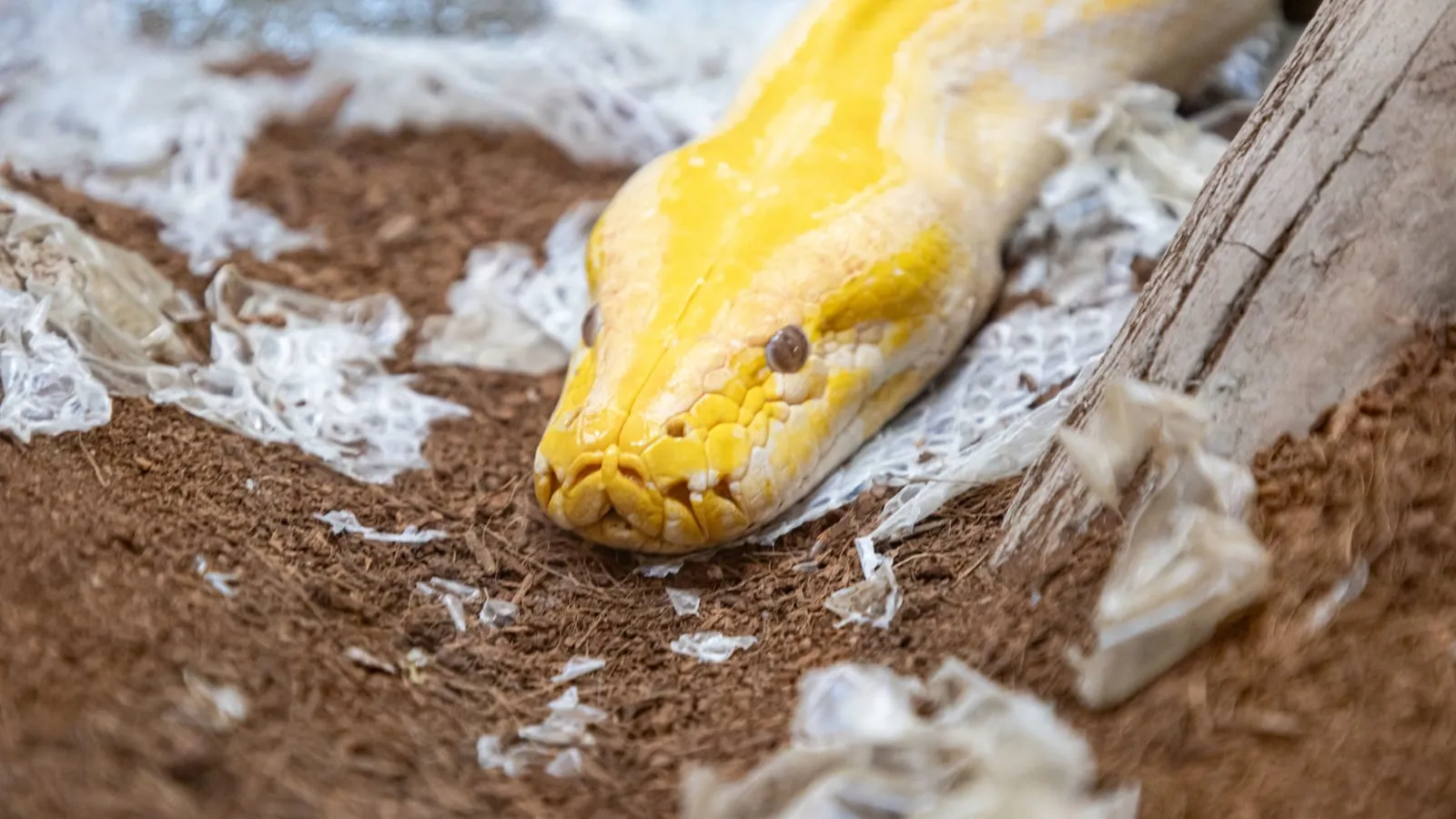
The headline act. A Blue-Eyed Leucistic is a near-pure-white snake — sometimes with a faint yellow dorsal wash — set off by striking, pale blue eyes. It is not albino; the pigment isn’t missing so much as switched off across the body. BELs are produced by combining two genes from the BEL complex — among them Lesser, Mojave, Butter, and their relatives. Pair two complex genes (or two copies of certain ones) and the white “super” look emerges. Different gene combinations yield subtly different whites, which is half the fun of the project.
Axanthic
Where most morphs add colour, Axanthic subtracts it. The mutation strips out yellow and red pigment, leaving a stunning silver-to-greyscale animal — almost a black-and-white photograph of a normal ball python. Several distinct, unrelated bloodlines exist (keepers will name lines like VPI, TSK, and others), and because they are separate genes they don’t always combine the way a beginner expects. Axanthic is recessive, so it hides in hets for generations and rewards careful pairing. In designer combos it does extraordinary things, muting and cooling other morphs into smoky, monochrome versions of themselves.
Banana / Coral Glow
One mutation, two discoveries. Banana and Coral Glow are the same underlying gene reached independently from two origins, and the result is unmistakable: vivid yellow-and-lavender colouring over a clean, bright base, often with scattered dark freckles. What makes Banana a favourite teaching example is its quirky sex-linked inheritance pattern — depending on which parent carries the gene, clutches skew heavily toward producing one sex of banana offspring. It’s a reminder that not every morph plays by the simple three-bucket rules.
Clown
A Clown is all about pattern, not just colour. This recessive morph produces bold, reduced patterning — clean flanks broken by dark “teardrop” markings around the eyes and a striking, connected dorsal stripe running down the back. The effect is clean, graphic, and instantly recognisable. Clown is one of the most-used recessive genes in high-end combos precisely because that reduced pattern reads beautifully against almost any colour mutation layered on top of it.
Scaleless / Scaleless Head
The most visually radical morph in the hobby. Scaleless ball pythons have greatly reduced or entirely absent scales, leaving smooth, soft, leather-looking skin; Scaleless Head animals show the effect on the head alone. The look is extraordinary — every underlying colour and pattern shows with unusual clarity. It also demands extra husbandry attention: more sensitive skin means careful surfaces (no rough decor that can abrade), well-managed humidity, and a watchful eye on shedding and hydration. Beautiful, but a morph for keepers who are ready to adjust their setup for it.
Desert Ghost
A keeper favourite for what it does in combination. Desert Ghost is a recessive morph that intensifies and cleans up colour — it brightens yellows, sharpens contrast, and gives finished animals a high-gloss, almost glowing quality. On its own it’s lovely; layered into a designer combo it elevates everything around it, which is why it’s so heavily prized despite being subtle in isolation. (The similarly valued Ultramel, another recessive, does comparable work, warming and refining a snake’s overall tone.)
Breed for health first, novelty second
Genetics this powerful come with responsibility. A handful of ball python genes carry real welfare concerns, and a premium approach to the hobby means knowing them and breeding accordingly.
The Spider gene is associated with a neurological “wobble” — a head tremor and balance issue that ranges from mild to severe. The super form of Spider is never produced, which points to a lethal effect when two copies are present. Several other genes carry their own risks: super Champagne and certain related combinations are linked to lethal or severe outcomes, and some pairings simply aren’t viable. Know what you’re working with before you pair it.
This is where the line between a hobbyist and a steward gets drawn. The rarest, flashiest combo is not worth producing if it reliably produces suffering. Responsible keepers research a gene’s known issues, avoid the pairings linked to lethal or debilitating outcomes, and weight every project toward the animals’ wellbeing. If you’re planning clutches, our guide to breeding ball pythons covers pairing, gravidity, and incubation in depth — but the rule underneath all of it is simple: breed for health first, novelty second.
Morph projects live or die on lineage. Which animals carry which hets, what produced what, which pairings to avoid — it’s a lot to hold in your head across a growing collection. That’s where LizardBox earns its place: every snake gets a profile carrying its morph and notes on what it’s het for, linking each one to its parents builds a family tree you can follow up and down the line, tags keep a project’s animals together, and every mating, clutch, and hatch goes into a searchable log. It won’t draw your Punnett squares for you — but when you go looking for what produced what, the answer will be written down instead of remembered.