Tarantulas are the rare critter that is genuinely low-maintenance and genuinely easy to kill — usually by the keeper, usually in ways that look harmless. They are striking, quiet, and astonishingly long-lived: females of some species pass 20 years. But their needs are exacting and unforgiving, and the single most important decision you make — the enclosure — happens before the spider even arrives.
Match the enclosure to the lifestyle
This is the whole game. Tarantulas are not interchangeable; a setup that keeps one species perfectly will kill another. Before anything else, learn how your species lives in the wild and build for that.
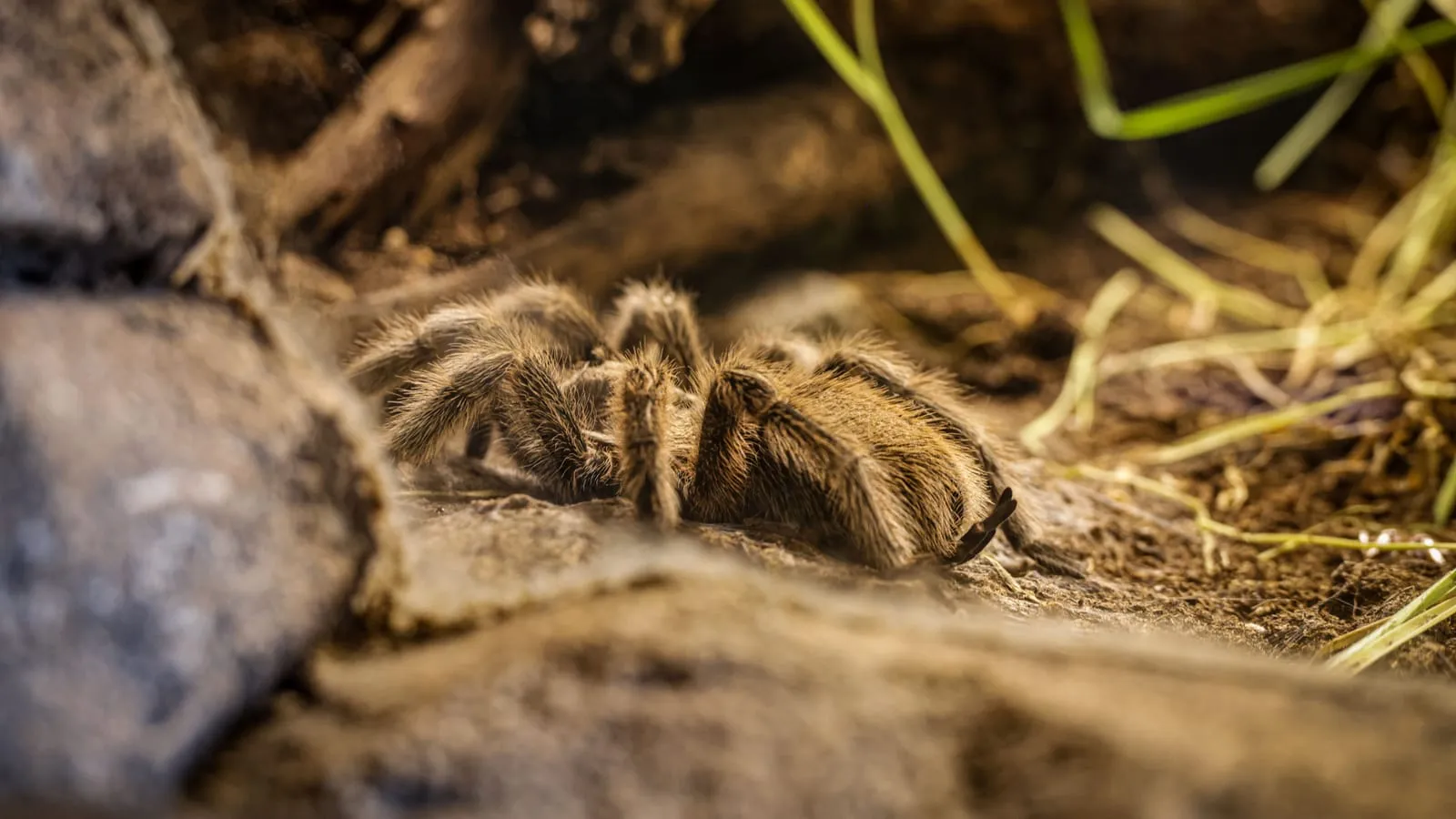
- Terrestrial species (Chilean rose, Grammostola rosea) are ground-dwellers. They want floor space and, critically, low height. A terrestrial tarantula’s abdomen is essentially a thin-walled balloon — a fall of even a few inches can rupture it, and that is fatal. Keep the distance from the substrate to the lid short.
- Arboreal species (Avicularia and Caribena pinktoes) live up trees. They need vertical height and a slab of cork bark to climb and anchor webbing against.
- Fossorial species are burrowers. They need deep substrate — enough to dig a proper tunnel and disappear into it for weeks.
Get this right and most of the rest is straightforward. Get it wrong and no amount of careful feeding makes up for it.
Best species for a first tarantula
Start with a docile, hardy, New World terrestrial. These three are the classic, well-earned recommendations:
- Chilean rose (Grammostola rosea) — calm, forgiving, and tolerant of a wide range of conditions.
- Mexican red-knee (Brachypelma hamorii) — gorgeous, slow-moving, and famously long-lived.
- Brazilian black (Grammostola pulchra) — jet-black, even-tempered, often called the perfect beginner spider.
Avoid Old World species (anything from Africa, Asia, or Australia) entirely until you have real experience. They are fast, defensive, and carry more potent venom — wrong for a first spider.
Enclosure essentials
Whatever the lifestyle, every tarantula setup needs the same core elements:
- A secure, tight-fitting lid. Tarantulas are escape artists and can squeeze through surprisingly small gaps. An escaped spider is usually a dead one.
- Cross-ventilation — ventilation holes on the sides, not just the top, so air actually moves and the enclosure doesn’t go stagnant and mouldy.
- The right substrate depth. Coir (coconut fibre) or peat works well; give burrowers enough depth to dig, and keep it shallow for arboreals.
- A hide — a piece of cork bark or a half-buried flowerpot. A tarantula with nowhere to retreat is a stressed tarantula.
- A shallow water dish. Keep it filled with clean water; this matters more than misting for most species.
On temperature and humidity, resist the urge to overthink it. Most popular species do fine at room temperature, around 70–80°F (21–27°C), with no special heating. Match humidity to your specific species — desert spiders want it dry, tropical ones a touch more moisture — but chasing high humidity with poor ventilation is a faster killer than a slightly dry enclosure.
Feeding without the risk
Tarantulas are pure carnivores, and feeding them is simple once you internalise a few rules:
- Prey no larger than the spider’s abdomen — judge by the body, never the leg span. Oversized prey stresses the animal and is often refused outright.
- Adults eat once a week or less. Spiderlings eat more often; mature tarantulas are slow-burning and need surprisingly little.
- Staple feeders are crickets, dubia roaches, and mealworms — gut-loaded before offering.
Always remove uneaten prey within 24 hours. A loose cricket left in the enclosure can chew on a defenceless, freshly moulting tarantula and kill it — one of the most common and most avoidable deaths in the hobby.
And do not panic when your spider stops eating. A tarantula that refuses food for days or even weeks is usually entering a pre-moult fast, not falling ill. Healthy tarantulas can go a remarkably long time between meals. Sudden interest in food again is often the sign that a moult is finished and the animal is back to business.
The moult: leave it alone
Moulting is the most vulnerable, most misunderstood moment in a tarantula’s life. As a moult approaches, your spider may stop eating, seal itself in webbing, and develop a darkened, bald patch on the abdomen.
Then it does something alarming: it flips onto its back. This looks exactly like a dying spider, and new keepers panic. It is normal — it is how tarantulas moult. What you do next decides whether the animal survives:
- Do not flip it back over. It is not stuck or struggling.
- Do not feed it, mist it, or disturb it. The process can take hours.
- Wait several days after the moult before offering food again — the new fangs are soft and need time to harden. A meal too soon can damage them.
A fresh moult is the best thing that can happen to your tarantula: brighter colours, regrown lost legs, and a clean bill of health. Your only job is patience.
Handling and safety
Here is the honest truth: most experienced keepers don’t handle their tarantulas at all, and you shouldn’t feel you’re missing out by following suit. There is little upside and real downside.
- They are fragile. A startled spider can leap or fall from your hand, and that fall can rupture the abdomen.
- New World species kick urticating hairs — barbed hairs flicked off the abdomen that irritate skin and, far worse, eyes. Never put your face near a spider that is bald-patched and defensive.
- Old World species are fast and more venomous — another reason beginners should stay away from them.
When you do need to move a tarantula — for a rehouse or cleaning — skip your hands. Use a soft brush to gently guide it and a catch cup to coax it inside, then transfer it calmly. It is slower, but it is safe for both of you.
For a different but equally rewarding arachnid to keep, see our scorpion care guide — many of the same principles around enclosure matching and minimal handling apply.
The quiet kind of keeping
Tarantulas reward a particular kind of attention: not constant fussing, but consistency over the long haul. The keepers who get the decades-long lifespans are the ones who notice the small signals — a pre-moult fast, the days since the last feed, when an enclosure last needed misting.
That is exactly where LizardBox earns its place. Log feedings and moults, track each spider’s weight and rehouse history, and set quiet reminders so a once-a-week feeder never gets forgotten — or overfed. For an animal whose needs are subtle and whose timeline runs in years, keeping a clear record is the difference between guessing and knowing.