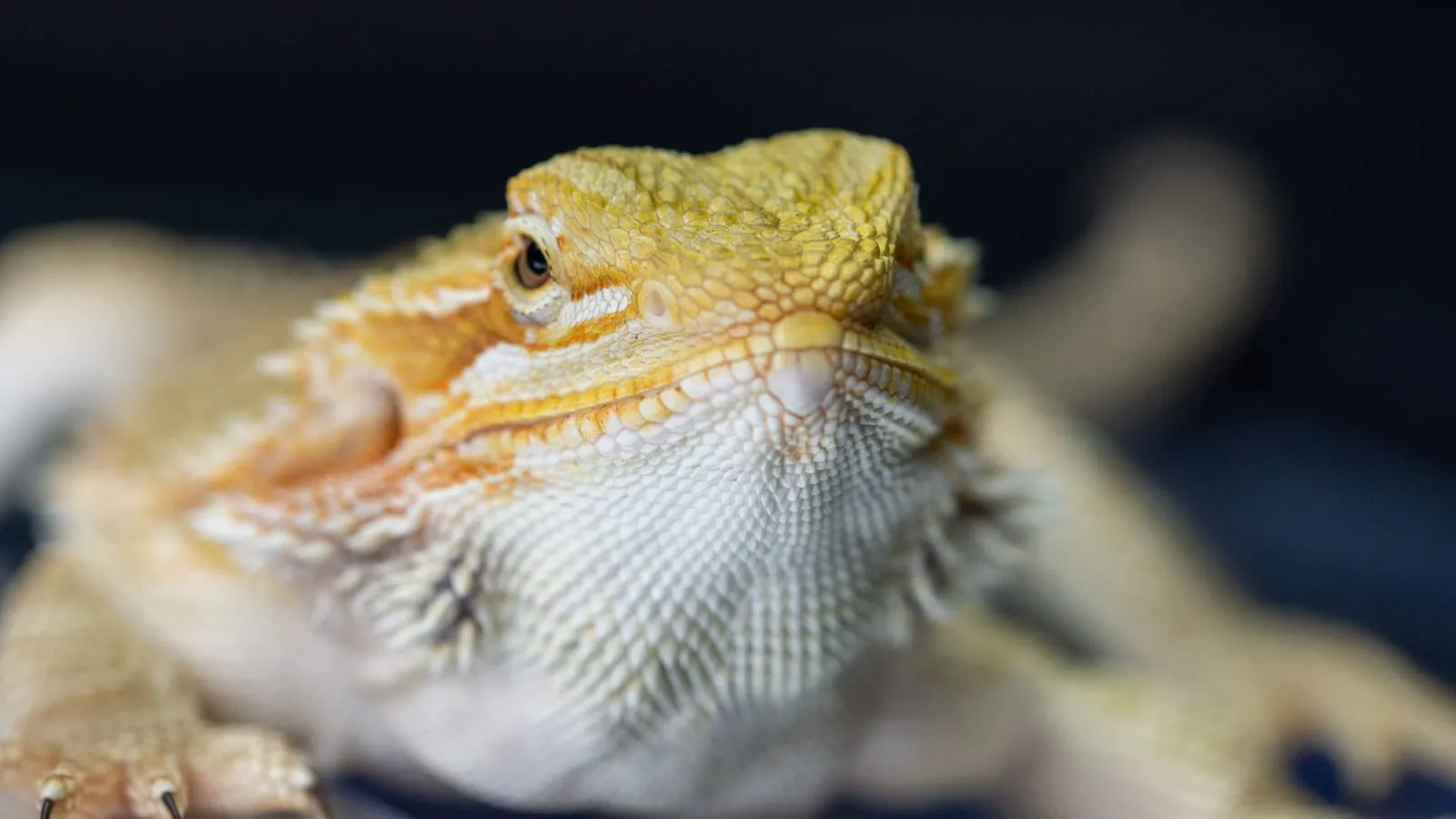
Bearded dragons are alert, expressive, and genuinely interactive — which is exactly why they get bought on impulse and then kept wrong. Get four things right from day one (space, heat, UVB, and diet) and a “beardie” is one of the most rewarding reptiles you can keep. Here is the setup that actually works.
Enclosure: bigger than the shop tells you
An adult bearded dragon needs a minimum of 4 × 2 × 2 ft (120 gallons) of floor space — and more is always better. They are ground-dwelling and active; a cramped tank is the most common cause of stress and obesity.
- Front-opening doors beat reaching in from above, which dragons read as a predator strike.
- Skip the tank dividers and “starter kits” sized for hatchlings — you will replace them within months.
- One enclosure, one dragon. They are territorial and will fight, sometimes fatally.
Heating: build a real temperature gradient
Bearded dragons are desert reptiles that thermoregulate by shuttling between hot and cool zones. You are building a gradient, not heating a box.
- Basking surface: 95–105°F (35–41°C) for adults. Babies and juveniles run hotter — 105–110°F (41–43°C) — because they are growing fast and digesting far more. Measure the surface with an infrared temp gun, not the air.
- Cool end: 75–85°F (24–29°C).
- Night: a drop to 65–75°F is healthy — no coloured night bulbs.
Use a white basking bulb on a dimming thermostat. Position it over a flat rock or platform so the dragon can get its whole body to temperature.
UVB: the non-negotiable
Without UVB, a bearded dragon cannot produce vitamin D3, cannot absorb calcium, and will develop metabolic bone disease. This is the single most common way beardies are slowly killed by well-meaning owners.
Use a T5 HO linear UVB tube — an Arcadia 12% or a Zoo Med Reptisun 10.0 — spanning about two-thirds of the enclosure. Mount it at the distance the manufacturer publishes for that bulb, and replace it every 12 months: the tube still glows long after its UVB output has faded.
Substrate
For beginners, the safe default is a non-loose substrate — tile, or a sealed solid surface — which removes any impaction risk and is easy to spot-clean. Experienced keepers often move to a bioactive soil/sand mix with cleanup crews and live plants, which looks great and supports natural digging. Avoid loose calcium sand and walnut shell.
Diet: the ratio flips as they grow
Bearded dragons are omnivores, and the balance changes with age:
- Babies & juveniles: roughly 70–80% insects, 20–30% greens. Feed insects 2–3 times a day, as much as they eat in 10 minutes.
- Adults: flip it — roughly 80% greens, 20% insects a few times a week.
Good staple feeders are dubia roaches, crickets, and black soldier fly larvae, gut-loaded for 24 hours first. Dust with a plain calcium supplement at most feedings and a multivitamin once a week.
Strong greens: collard, mustard, dandelion, and turnip greens, plus squash and bell pepper. Avoid spinach and beet greens (oxalates bind calcium), iceberg lettuce (no nutrition), and anything from the wild that may carry pesticides. Avocado and rhubarb are toxic.
Hydration
Beardies get most of their water from food. Offer a shallow, tip-proof water dish, mist their greens, and provide the occasional lukewarm soak — which also helps loosen a stubborn shed.
Handling and temperament
Bearded dragons tolerate handling better than almost any reptile. Let a new dragon settle for a week or two, then start short, daily sessions. Always support the whole body from underneath, and watch for stress cues — a gaping mouth, a darkened beard, or fast “arm waving.” Calm, consistent handling turns most beardies into genuinely tame animals.
What good keeping looks like
The difference between a surviving dragon and a thriving one is consistency — steady temps, fresh UVB on schedule, the right diet for its age, and catching small changes early. A dragon that skips meals, drops weight, or struggles to shed is telling you something.
That is the part LizardBox makes easy: log feedings, weights, sheds, and vet visits, set a reminder for the day that UVB bulb needs replacing, and read the weight curve instead of trying to remember it.